The Lab Result and the Antibiotic: What Augmentin Can Do to Your Next Blood Test
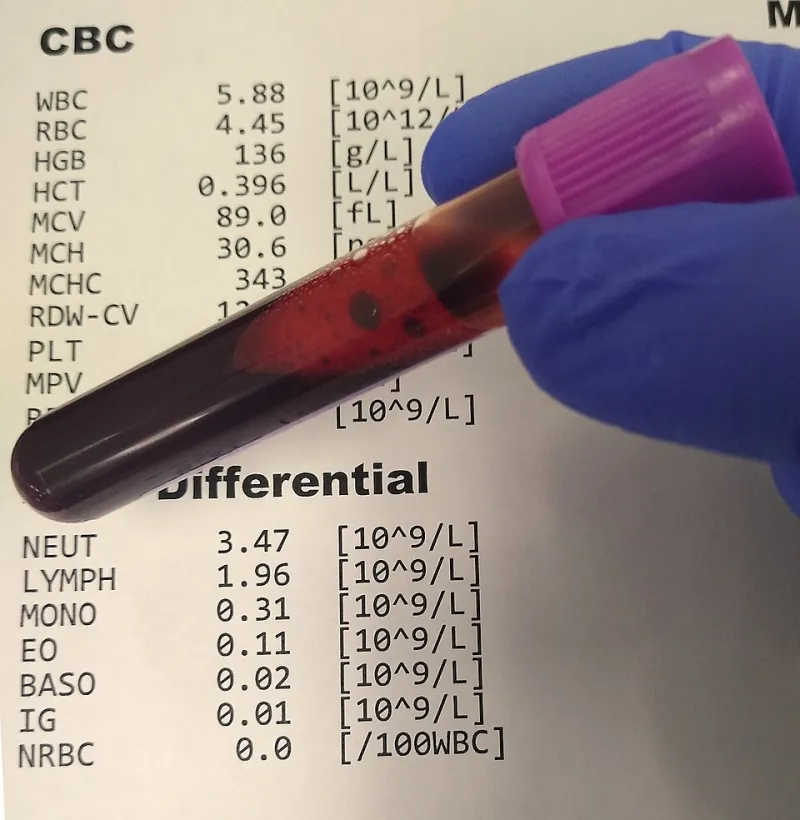
Photo: SpicyMilkBoy, CC BY-SA 4.0, via Wikimedia Commons
A blood test is often treated as a neutral snapshot, but the result depends on many factors: hydration, timing, other medicines, and the reason the test was ordered. During an active course of Augmentin, those factors include the antibiotic itself. Augmentin can affect laboratory results in ways that are clinically important, mildly confusing, or entirely unrelated to the infection being treated.
This article is general education. It does not replace advice from the clinician who ordered the test or from a pharmacist reviewing your medicines.
Two Kinds of Abnormal
When a lab result changes during antibiotic treatment, the change may reflect a true biological effect of the drug, a laboratory assay interference, or the underlying illness. A true effect means the medicine is influencing the body in a measurable way, such as a rise in liver enzymes. An assay interference means the medicine or its breakdown products are confusing the test method itself, producing a result that does not accurately reflect the body.
The distinction matters. A true effect may require monitoring or a change in treatment. An interference may require a repeat test with a different method or a note in the medical record. Either way, the first step is communication.
Tests That May Deserve a Second Look
Augmentin, like other antibiotics, has been associated with changes in several laboratory measurements. The evidence varies by test and by patient, so a single abnormal result should be interpreted in context rather than treated as proof of harm.
Liver enzymes and bilirubin can rise during Augmentin treatment. In most patients, these changes are mild and reversible, but Augmentin can rarely cause cholestatic liver injury. A clinician may monitor liver tests if symptoms such as jaundice, dark urine, pale stools, or upper abdominal discomfort appear. An isolated enzyme elevation without symptoms may still deserve attention, especially if it persists after the course.
For patients taking warfarin, antibiotics can alter the international normalized ratio, or INR. Augmentin may disturb gut bacteria that produce vitamin K, and the overall clinical picture can affect anticoagulation. An unexpected INR result during an antibiotic course should prompt a call to the prescribing clinician rather than an independent dose adjustment.
Blood counts can also change. Eosinophilia, anemia, and low platelet counts have been reported with penicillin-type antibiotics, though serious blood disorders are uncommon. A routine complete blood count that looks different during treatment may need to be repeated or reviewed alongside symptoms.
Specialized tests can be affected as well. Some beta-lactam antibiotics have been associated with false-positive results on certain fungal tests, such as galactomannan assays, and with positive direct antiglobulin, or Coombs, tests in drug-induced immune hemolysis. Urine chemistry tests may also be influenced by high concentrations of medicine or its metabolites, depending on the assay. These are not reasons to panic; they are reasons to tell the laboratory and the ordering clinician what medicines are active.
Why the Laboratory Needs to Know
The laboratory may not know which medicines a patient is taking unless the ordering clinician includes that information or the patient speaks up. When you arrive for a blood draw or urine test, tell the staff that you are taking Augmentin or amoxicillin/clavulanate, the dose, and the date you started. If you have stopped the antibiotic recently, mention the stop date as well.
This information helps the laboratory interpret unexpected results, choose an alternative method when appropriate, and communicate with the ordering clinician. It also helps prevent a repeat test that is unnecessary because the result was already explained by the medication.
What to Tell the Ordering Clinician
Before the test, tell the clinician about all medicines, including antibiotics, over-the-counter products, and supplements. After the test, if a result is abnormal, ask whether the antibiotic could be contributing. Do not stop the antibiotic on your own to prepare for a test unless the prescriber specifically instructs you to do so.
Ask three questions: Is this result consistent with the antibiotic's known effects? Could the test method be affected? Does this result change the plan for treating the infection? The answers help distinguish a meaningful finding from a transient, medication-related change.
Avoiding Unnecessary Repeat Testing
Repeat testing is not automatically wrong, but it should have a purpose. A repeat test may be appropriate if the result is unexpected, if symptoms are worsening, or if the clinician needs a baseline after stopping the medicine. A repeat test is less useful if it is ordered simply because the first result was abnormal and no one considered the antibiotic.
Ask whether the test should be delayed until after the course, whether a different assay would be more reliable, and whether the result would change treatment. In some cases, the safest plan is to finish the antibiotic and recheck later. In others, prompt review is needed.
The Bottom Line
Augmentin can muddy laboratory results, but it does not make every abnormal result meaningless. The practical response is transparency: tell the laboratory and the ordering clinician about the active antibiotic course, ask how the medicine might affect the specific test, and avoid both panic and dismissal. A result is most useful when it is interpreted with the full medication history in view.